Check the animal story
Ask about feed, pasture access, routine antibiotics or hormones, freshness, delivery, and whether the claim applies to the specific item you buy.
Start with practical source quality, not wellness branding. Use this hub to check meat, eggs, produce, restaurant oils, and repeatable weekly food sources.
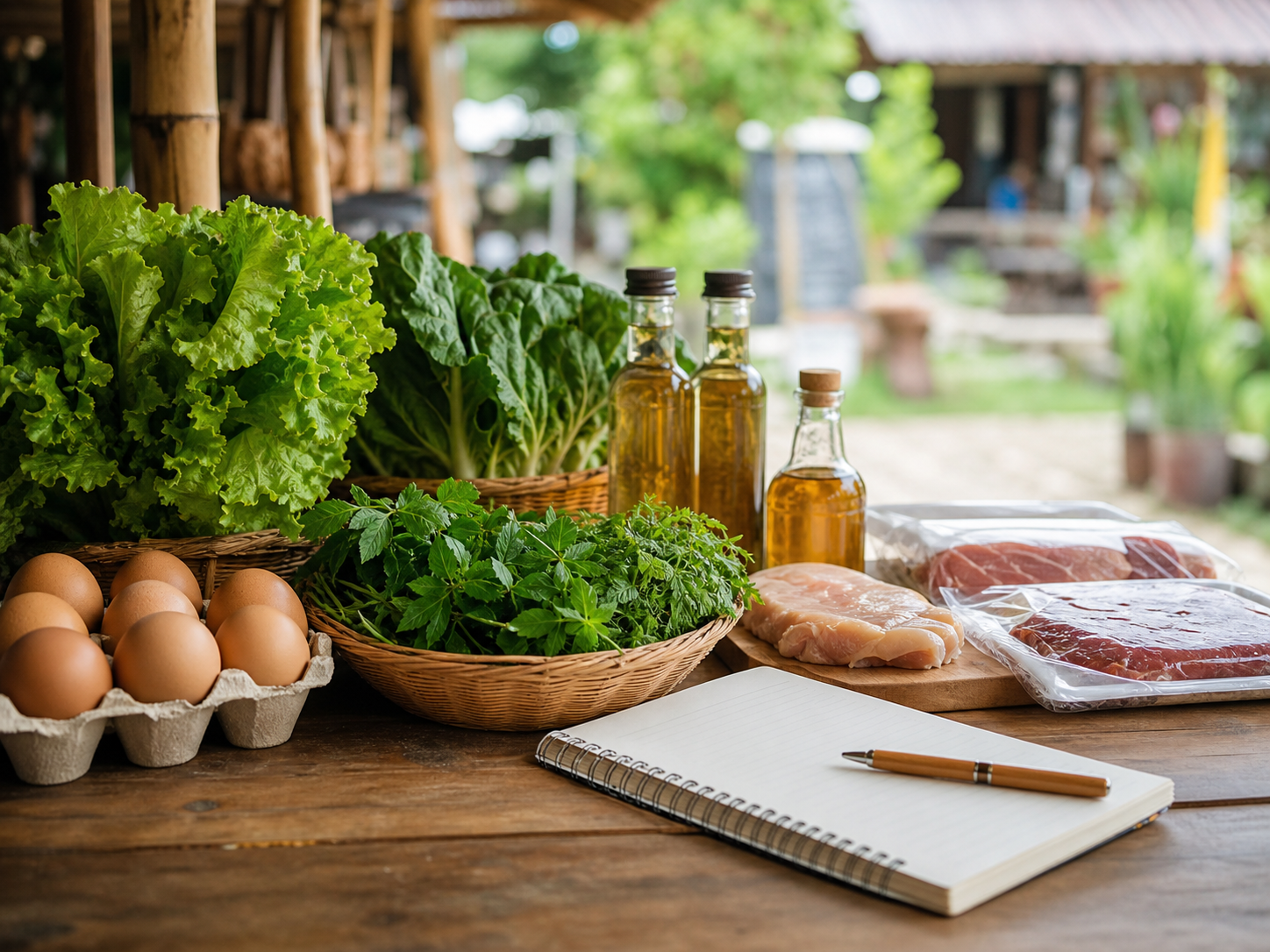
A clean-food source is not public-ready because it sounds organic, local, or natural. The useful questions are what the product actually is, how it was raised or grown, what proof exists, whether the buying path works for foreigners, and whether supply is reliable week to week.
Ask about feed, pasture access, routine antibiotics or hormones, freshness, delivery, and whether the claim applies to the specific item you buy.
Organic, pesticide-free, hydroponic, regenerative, and natural are different claims. Look for certification, farm details, current stock, and buyer experience.
A healthy-looking meal can still be a poor fit if it depends on cheap oil, sweet sauce, flour coating, or ultra-processed dressings.
Malatang can be a useful clean-ish fallback when you choose whole foods, control broth and sauce, and avoid hot plastic takeaway.
Send the name, what you buy, where you buy it, why you trust it, and any proof or recent buyer experience. Healthy Farang will verify before using stronger public wording.