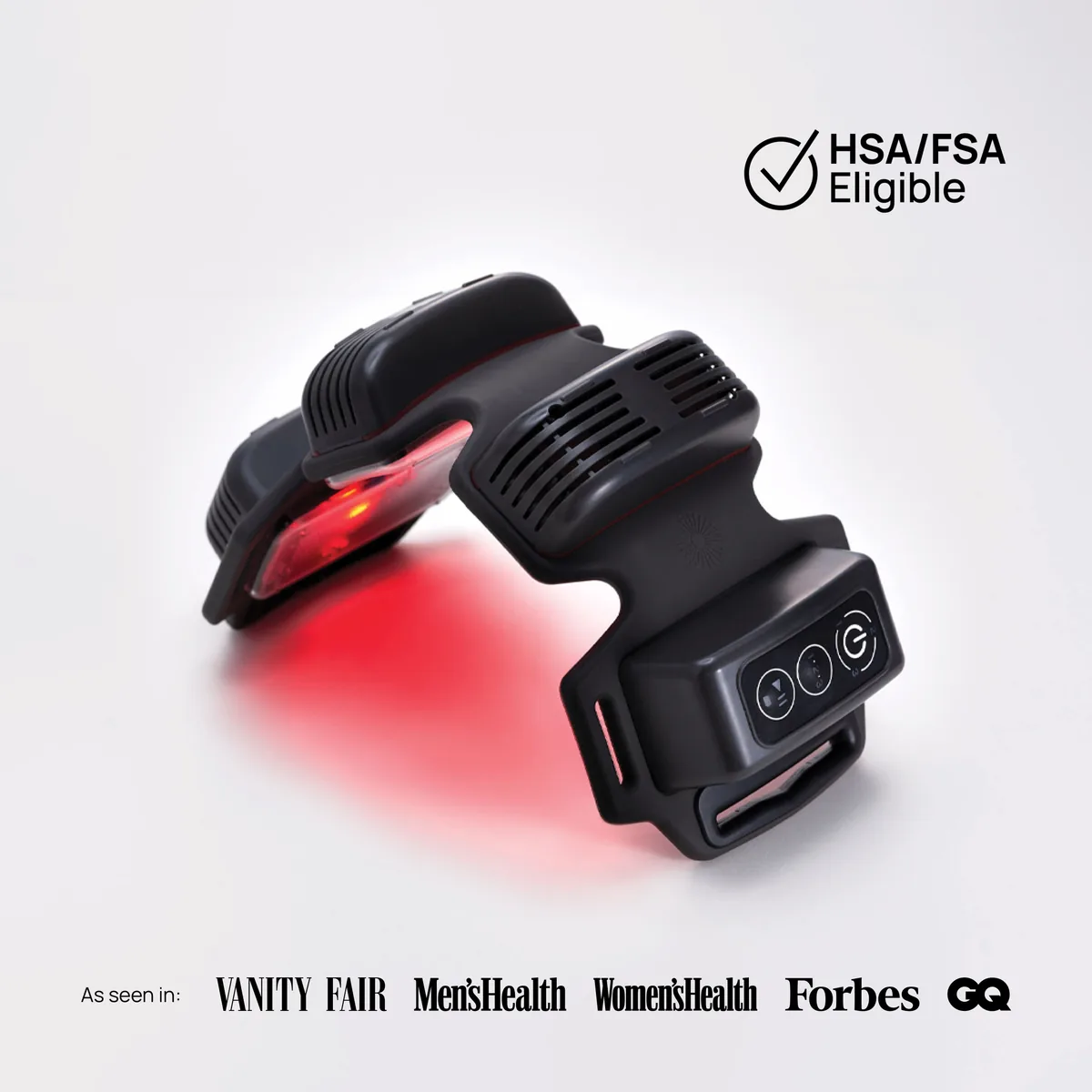
Most recovery gadgets do not fail because the idea is ridiculous. They fail because the device never earns a place in the week. It is too awkward, too slow, too fussy, or too easy to ignore.
That is the useful filter for red and near-infrared light therapy. Do not start with the trend. Start with the area you keep coming back to: the knee after training, the shoulder that needs more attention, the lower back that makes you change your plan, or the neck that tightens up after too many hours at a screen.
If you know the target and you can make the session easy, targeted red/NIR light can be a practical recovery-support tool. If you are buying because the category sounds impressive, save the money.
Why targeted matters
Panels can be useful, especially for broader exposure. But a panel is not always the easiest tool for a joint, small area, or recurring tight spot. A wearable device changes the behavior: you put the light where you want it, sit down, and get the session done without turning it into a whole setup.
That is why FlexBeam stayed in my rotation. I first found it at a Chiang Mai biohacking meetup in 2019, met the founders, and became an early user. Years later, I am still using the same unit. That matters more to me than a polished product claim.
When I would consider FlexBeam
- You already know the target area: knee, shoulder, back, elbow, neck, or another recurring recovery bottleneck.
- You want a device that wraps around the area instead of making you stand in front of a panel.
- You can use it consistently without needing a complicated setup.
- You are adding it to the basics, not replacing them: sleep, training load, strength, mobility, nutrition, and clinician input when needed.
When I would skip it
- You cannot name the area you would use it on this week.
- You expect it to replace rehab, medical evaluation, or training changes.
- You already own recovery tools that sit unused.
- The price would create stress or distract from more basic health work.
The buying rule
Buy recovery tools for the problem you actually have. If the problem is sleep, fix sleep first. If the problem is poor training structure, fix the training. If the problem is a specific area that keeps needing support, a targeted red/NIR device can make sense.
For me, FlexBeam passed the simplest test: I kept using it for years.
Why this is on Healthy Farang
Healthy Farang is Jason's practical health-discovery project. It started from life in Thailand, but this FlexBeam note is not Thailand-only. Most of Jason's Substack audience is in the United States, and FlexBeam is a U.S.-relevant product with a direct Recharge Health buying path.
The Healthy Farang standard is simple: recommend only when the product has a clear job, the claims stay conservative, and the buying path is transparent.
Affiliate disclosure
Healthy Farang may earn a commission if you buy through the FlexBeam link. That does not change the recommendation filter: buy it only if it fits a recovery routine you will actually use.